Plastic Injection Molding in Saudi Arabia: Capabilities & Process
A complete guide to plastic injection molding capabilities and processes in Saudi Arabia – covering mould design, material selection, toolroom operations, and production from Riyadh for B2B manufacturers and brand owners across KSA.
Saudi Arabia’s Vision 2030 industrial push has made local plastic manufacturing a strategic priority for procurement teams across KSA. This guide covers the full capabilities and process behind plastic injection molding in Saudi Arabia – from part design and toolroom engineering to material selection, mould trials, and series production in Riyadh.
A complete guide to plastic injection molding capabilities and processes in Saudi Arabia – covering mould design, material selection, toolroom operations, and production from Riyadh, delivered by Sabin Plastic KSA, for B2B manufacturers and brand owners across KSA.
What Is Plastic Injection Molding?
Plastic injection molding is a high-volume manufacturing process where molten thermoplastic resin is injected under pressure into a precision steel or aluminium mould, cooled, and ejected as a finished part. Cycle times typically run between 10 and 90 seconds depending on part geometry and wall thickness, making it one of the most cost-efficient routes to complex, repeatable plastic components at scale.
The core appeal for B2B buyers is the combination of design freedom and repeatability. Once your mould is qualified, every shot should be dimensionally identical – a critical requirement for industries like food & beverage packaging, FMCG, and industrial assemblies where tolerances and aesthetics are non-negotiable.
“The mould is the factory. Getting the steel right the first time is the single biggest lever on your total program cost.”
The Injection Molding Process – Step by Step
Understanding the full process helps procurement and engineering teams ask better questions, set realistic timelines, and avoid costly revisions downstream.
- Part Design & DFM Review
The customer supplies 3D models (STEP/IGES preferred) and 2D, 3D drawings with critical dimensions. Sabin Plastics’s engineering team conducts a Design for Manufacturability (DFM) review – checking draft angles (typically 1–3°), wall thickness uniformity, sink mark risk, gate locations, and ejection feasibility before a single tool is cut. - Mould Design & CAD/CAM
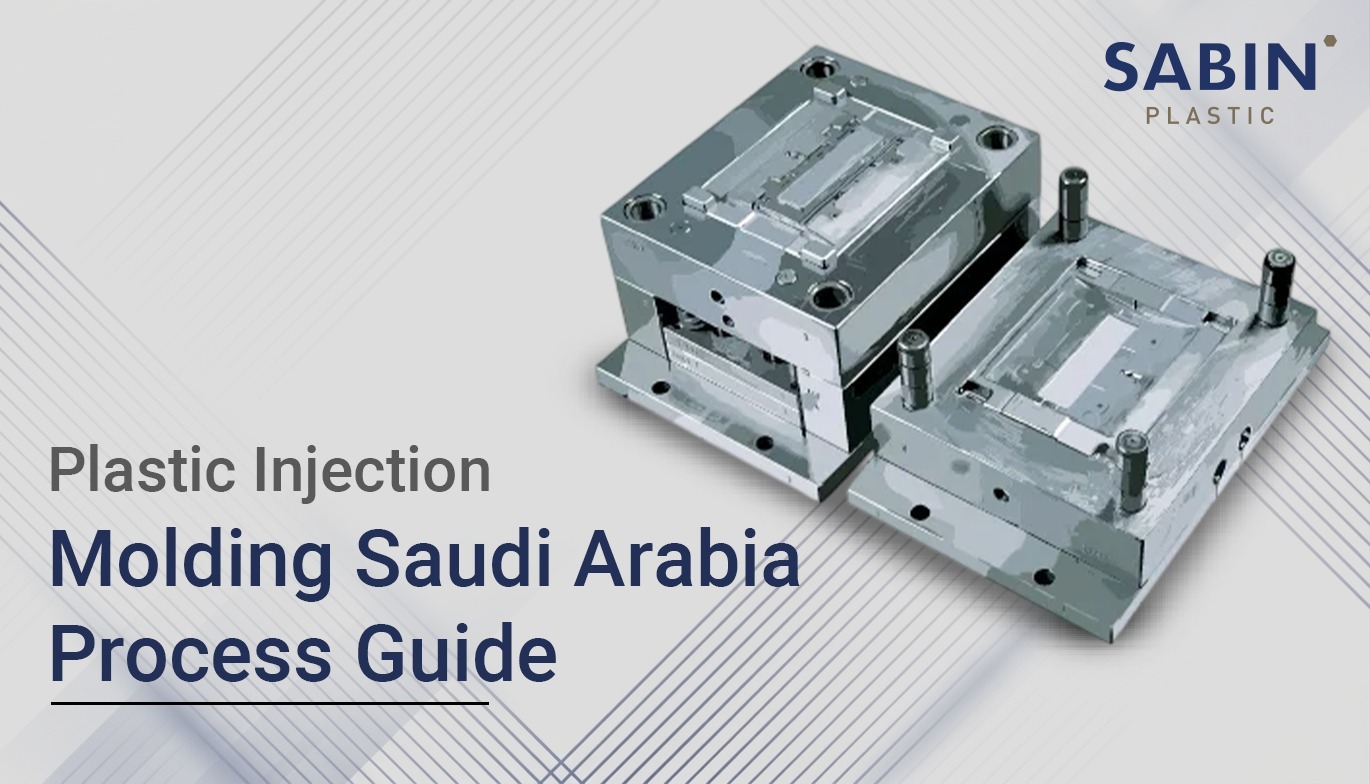
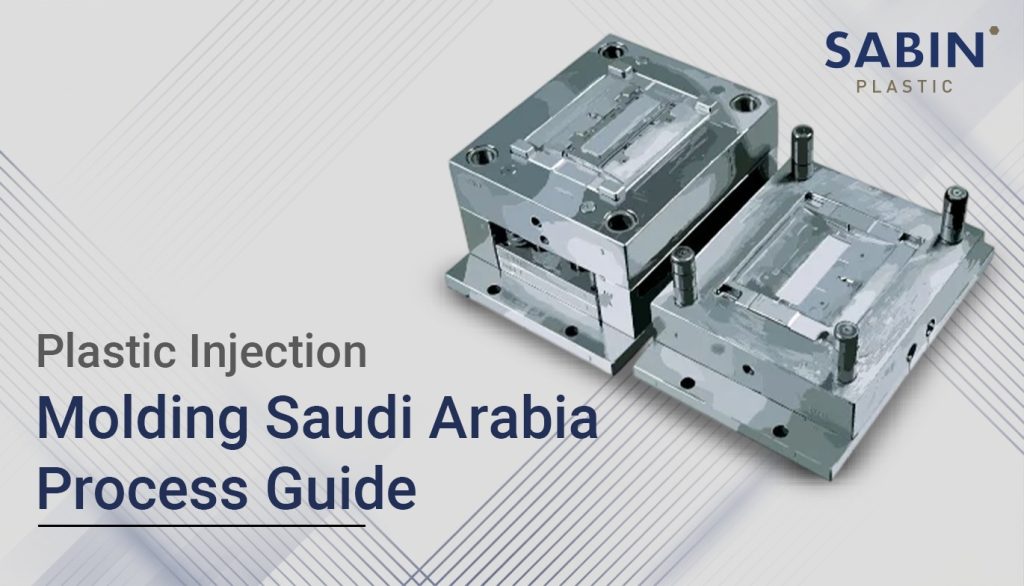
Toolroom engineers design the mould in CAD, specifying cavity/core steel grades, cooling circuit layout, runner system (cold or hot), gating strategy, and ejection mechanism. CAM programming then drives the CNC/VMC machining paths, EDM electrode design, and grinding sequences. - Mould Fabrication
CNC and VMC machining shapes the cavity and core blocks. Wire or sinker EDM creates features impossible to mill – fine ribs, sharp corners, and deep pockets. Surface grinding achieves the flatness and parallelism required for parting-line integrity. Texture, engrave updates, and chemical etching are applied per specification. - Trial & Sampling (T1 / T2)
The assembled mould runs trial shots – typically a T1 (first steel) trial followed by T2 after corrections. Dimensional reports, colour checks, and top-load or functional tests are run against the part specification. 3D-printed prototypes and fixtures can fast-track fixture and jig design in parallel. - PPAP / Validation Pack
On request, Sabin Plastic prepares PPAP-style submission packs covering dimensional reports, material certifications, process capability data (Cpk), and approved sample parts. This documentation is increasingly required by FMCG brand owners and tier-1 industrial customers operating in KSA. - Series Production in Riyadh
Once samples are approved, the qualified mould transfers to the Riyadh production facility. Shop-floor and ERP monitoring tracks tool shots, scheduled maintenance intervals, and order traceability. The toolroom remains on standby for rapid change inserts, repairs, or cavitation uplifts.
Injection Molding Materials – What Sabin plastic Supports
Resin selection is one of the most consequential decisions in any plastic program. The right material balances mechanical performance, chemical resistance, regulatory compliance, processability, and cost. Below are the primary resins supported for injection moulding at Sabin Plastic, with typical applications relevant to the KSA market.
Resin | Key Properties | Typical KSA Applications |
PP Polypropylene | Lightweight, fatigue-resistant, food-safe grades, low moisture absorption | Caps & closures, food containers, household goods, crates |
HDPE High-Density PE | Excellent chemical resistance, rigid, wide temperature range | Jerry cans, industrial containers, piping components |
ABS Acrylonitrile BS | High impact strength, good surface finish, easily painted/plated | Consumer electronics housings, automotive trims, appliance parts |
PC Polycarbonate | High optical clarity, impact resistance, wide service temperature | Lighting lenses, safety equipment, water dispensers |
PS / SAN | Rigid, cost-effective, good clarity (SAN), easy processing | Disposable foodservice, cosmetic packaging, display items |
PVC | Flame retardant, chemical resistant; rigid or flexible compounds | Conduit fittings, medical accessories, cable components |
Nylon (PA) | High mechanical strength, heat resistance, wear resistance | Gear components, brackets, industrial fasteners |
Note: Other resins are available on request. If you have a specific performance target (operating temperature, chemical exposure, or regulatory standard), share it in your RFQ and Sabin Plastic’s engineering team will recommend the appropriate grade or compound.
Toolroom Capabilities Backing KSA Production
A production facility is only as reliable as the toolroom supporting it. Sabin Plastic’s KSA toolroom provides dedicated engineering and maintenance capacity so that your KSA injection program is never held hostage to mould problems.
(Machining) – CNC/VMC & EDM
High-precision CNC milling and vertical machining centers for cavity and core profiles; wire and sinker EDM for complex geometries and fine features.
(Surface Work) – Grinding & Polishing
Surface grinding for parting-line flatness and insert parallelism; manual and machine polishing to achieve Class A cosmetic finishes or specified SPI grades.
(Aesthetics)– Texture & Engraving:
In-house texture updates, logo engraving, and date-stamp insert changes. Standard grain patterns available – no need to outsource cosmetic updates.
(Rapid Iteration) – 3D Printing
Quick prototypes, checking fixtures, and trial assembly jigs via in-house 3D printing – enabling parallel validation activities and reducing pre-production lead times.
(Quality) – Dimensional & Functional QC
Pilot runs dimensional reports, top-load testing, colour checks, and PPAP-style documentation packs on request. Full traceability from first trial to series release.
(Planning) – ERP & Shop-Floor Monitoring
Tool shot counters, planned maintenance schedules, and ERP-linked traceability give procurement teams real-time visibility on mould health and production status.
Mould Maintenance & Change Services
For brands managing multiple SKUs or seasonal variants, mould flexibility is as important as mould quality. Sabin Plastic’s toolroom handles a full range of in-service maintenance and change activities – without stalling your production launches:
Toolroom Service Menu
- Preventive maintenance & scheduled inspections
- Insert changes – logos, ribs, boss profiles
- Gate relocation and vent optimisation
- Alignment corrections and parting-line rework
- Weld and polish repairs for worn cavity surfaces
- Cavity addition for volume uplifts
- Date-stamp and batch-code insert replacement
- Texture refresh and chemical re-etching
Why Local Injection Molding Matters for KSA Buyers
The economic case for sourcing plastic injection molding within Saudi Arabia – or at minimum from a regional toolroom with KSA production – has strengthened significantly under Vision 2030’s industrial localization mandate and the growth of Saudi-based FMCG, construction, and consumer goods sectors.
Shorter lead times. A mould change or new trial that might take six weeks waiting for an overseas supplier can be turned in days from a toolroom serving Riyadh. This is particularly valuable for fast-moving consumer goods programs where packaging artwork, regulatory text, or product volumes change frequently.
Local content compliance. Increasingly, government tenders and large retail contracts in KSA specify local or regional manufacturing content. Having a Riyadh production address with a KSA VAT registration and CR number simplifies compliance documentation.
Logistics cost and risk. Finished part shipments from the UAE to KSA are routine, but mould transit – especially for urgent repairs – carries lead time and damage risk. Keeping the toolroom in the same time zone and under four hours of freight distance mitigates that exposure.
“Regional production reduces your exposure to freight volatility while keeping the toolroom close enough for same-week response on urgent changes.”
How to Submit a Plastic Injection Molding RFQ
A well-prepared RFQ compresses the quoting process, reduces back-and-forth, and gets you to a budgetary price – or a formal quotation – faster. Here is everything Sabin plastic KSA needs to price your custom plastic injection molding requirement accurately:
RFQ Checklist – Injection Moulding
- Company name & city / site location
- Process: Injection/Blow/Press tool
- Part name and functional description
- Annual volume & first-order quantity
- Resin grade (or performance target)
- 3D file (STEP preferred) + 2D drawing with critical dims
- Cosmetic / texture specification
- Tool class: prototype, production, or export
- Number of cavities (if known)
- Brand marks, embossing, or date-stamp requirements
- Target start of production (SOP) date in KSA
- PPAP documentation requirement (if applicable)
Don’t have all of this yet? Partial information is fine at the enquiry stage. Share what you have, and Sabin Plastics’s team will advise on what additional data is needed to generate a formal quote. DFM feedback is available before final 3D models are locked.