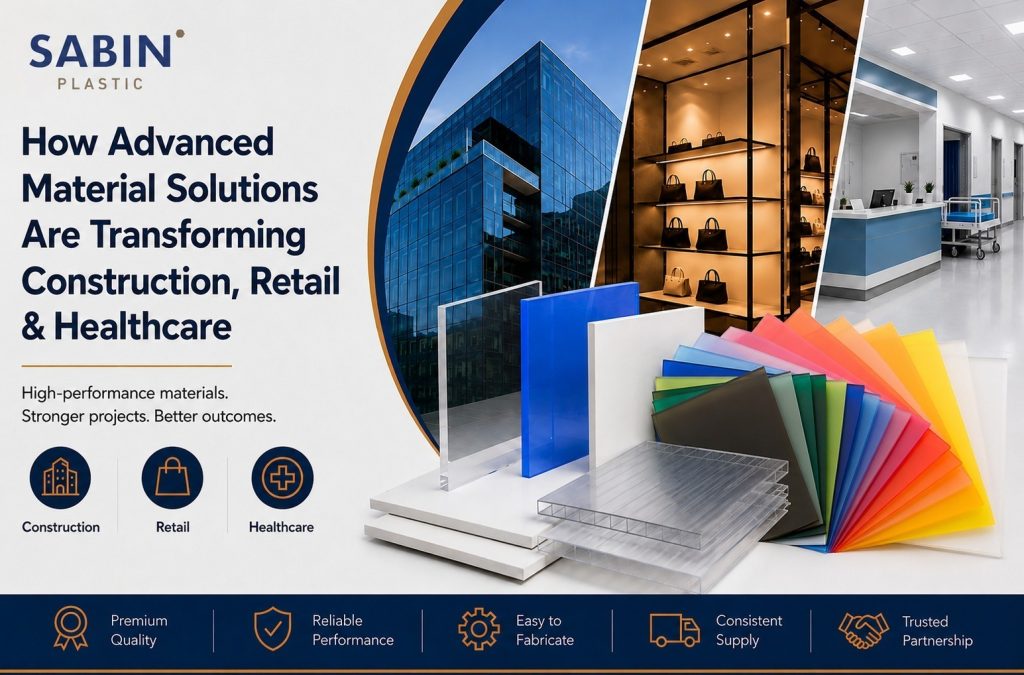
Materials are no longer defined only by their traditional applications. As architecture, interiors and commercial design become more ambitious, familiar materials are being used in increasingly creative and unconventional ways.
Acrylic is a clear example. Once commonly associated with signage, cabinets and display applications, it is now being used for structural pool walls and viewing panels, premium furniture, architectural features and high-end interiors. The material may be familiar, but the scale, form and context in which it is being used have changed.
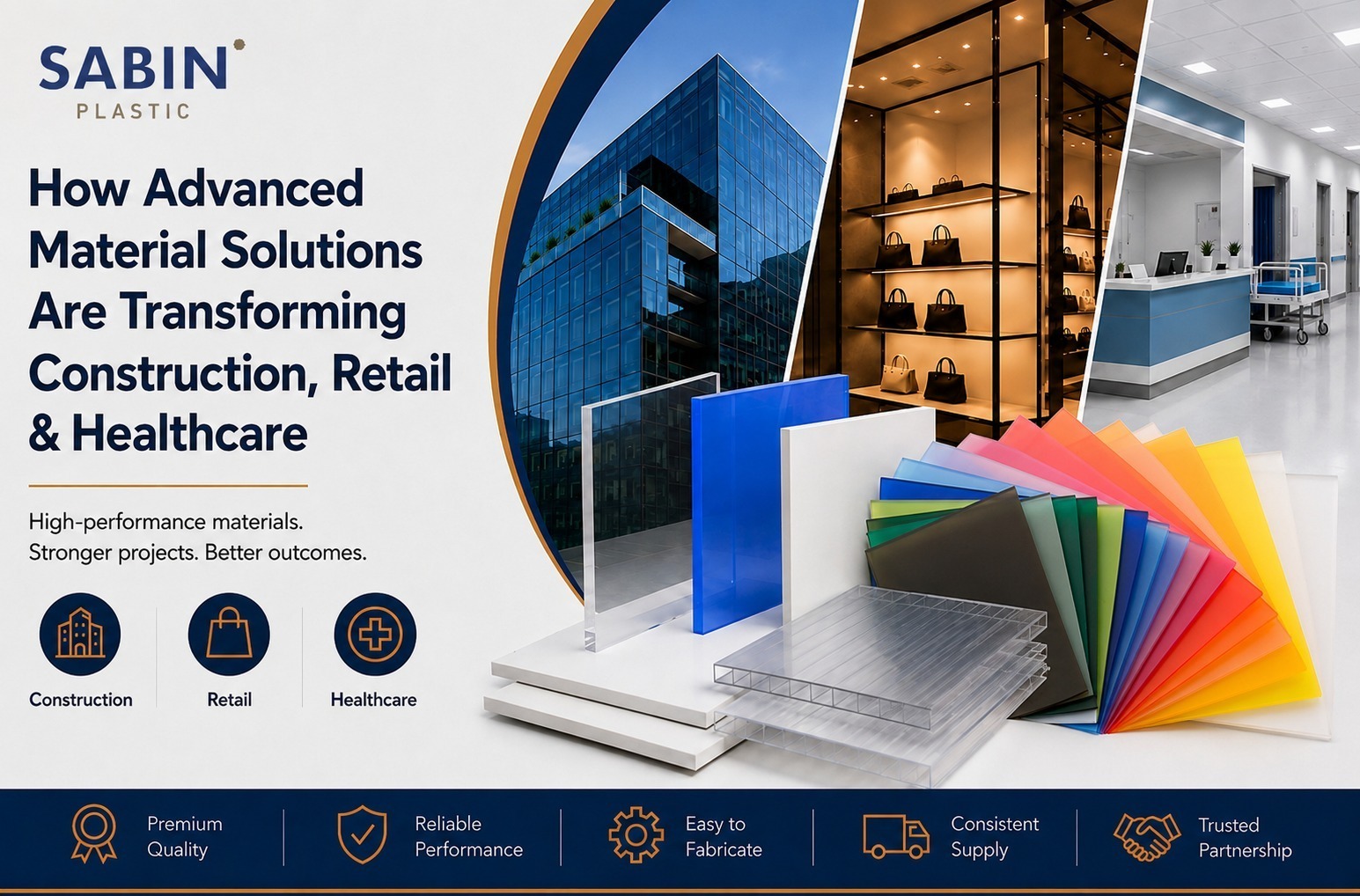
The same evolution can be seen across polycarbonate, aluminium composite panels (ACP), PVC foam boards and other sheet materials. As design aesthetics and fabrication capabilities advance, these materials are opening new possibilities across construction, retail, healthcare and other commercial applications.
Material Innovation Is Also About Using Materials Differently
Innovation does not always mean creating an entirely new material. Sometimes, it comes from reimagining what an existing material can do.
Advances in fabrication and design allow materials to be cut, formed, routed, printed, illuminated and combined in ways that expand their traditional applications.
As a result, architects, designers and fabricators are increasingly moving beyond the question:
“What is this material normally used for?”
towards:
“What else can we create with it?”
This shift is influencing both the aesthetics and functionality of modern spaces.
Construction & Architecture: From Functional Materials to Design Elements
Construction and architecture provide some of the strongest examples of changing material applications.
Acrylic Beyond Signage and Displays
Acrylic has traditionally been associated with signage, cabinets, partitions and display applications. Today, advances in fabrication and engineering have expanded its use considerably.
Depending on the technical requirements of the application, acrylic can now be used for structural pool walls and viewing panels, premium furniture, architectural features, sculptural installations, high-end interiors and large-format transparent applications.
Its clarity, finish and fabrication flexibility allow transparency itself to become part of an architectural concept rather than simply serving a functional purpose.
Polycarbonate Beyond Conventional Applications
Polycarbonate is well established in roofing, protective and industrial applications because of its high impact resistance.
Today, its combination of transparency, light transmission, lower weight and fabrication possibilities is also giving architects and designers opportunities to explore more design-led applications.
Solid and multiwall polycarbonate can be incorporated into translucent architectural elements, partitions, canopies and other features where light, form and performance need to work together.
ACP Beyond Standard Cladding
Aluminium Composite Panels are widely recognised for façade and cladding applications. However, changing architectural aesthetics are expanding how ACP can contribute to the overall visual identity of a building.
Colour, texture, finishes and fabricated forms allow ACP to become a design element rather than simply an exterior covering, creating more possibilities for façades and commercial environments.
Across all three materials, the shift is similar: materials traditionally associated with specific functions are increasingly being reconsidered for what else they can contribute to a design.
Retail: Materials Are Becoming Part of the Experience
The evolution is particularly visible in retail, where physical spaces increasingly need to create memorable brand experiences.
Retail design has moved beyond conventional counters, signs and display fixtures. Premium stores, pop-ups, kiosks and branded environments increasingly combine materials, lighting, graphics, finishes and fabricated elements to create a distinctive visual identity.
Acrylic, for example, can move from a simple display panel to an illuminated feature, premium furniture element, sculptural installation or transparent architectural component. Mirror, metallic, coloured and light-diffusing finishes create further possibilities.
Similarly, print media is no longer limited to conventional advertising graphics. It can become part of environmental branding, interior graphics, surface transformation and experiential spaces.
The result is a more integrated approach where the material itself becomes part of how the brand is experienced.
Healthcare & Functional Spaces: New Requirements, New Applications
In healthcare and institutional environments, material evolution is often driven more by functionality than aesthetics.
Industrial polymer sheets such as HDPE, ABS, PETG and other sheet materials can support different fabricated applications depending on project specifications and material properties.
Their ability to be cut, routed, bent or formed can make them suitable for applications such as partitions, cabinetry, interior components, signage and other functional elements.
Rather than defining a material by a single traditional use, project teams can evaluate how its individual characteristics and fabrication possibilities could support a specific application.
From Individual Materials to Material Combinations
Another significant shift in modern design is that materials are increasingly being considered in combination rather than isolation.
A commercial environment may use acrylic for transparency, ACP or other materials for architectural surfaces, fabricated sheets for dimensional elements and print media for graphics and branding.
Add lighting, printing, CNC fabrication, forming and different finishing techniques, and familiar materials can take on entirely different roles.
This intersection of material, fabrication and design is helping architects, designers and fabricators create spaces that would have been difficult to achieve through conventional applications alone.
Familiar Materials. New Possibilities.
The future of material innovation will not be defined only by the introduction of new materials. It will also be shaped by new ways of using materials we already know.
Acrylic moving from conventional signage and display applications into structural pools, premium furniture and architectural features is one example. Polycarbonate moving beyond traditional roofing and protective applications into more design-led environments is another.
As aesthetics, fabrication technologies and project requirements continue to evolve, the boundaries between material, function and design will continue to shift.
Sabin Plastic Trading supports this evolution by supplying a broad portfolio of acrylic sheets, polycarbonate sheets, ACP sheets, PVC foam boards, industrial sheets, print media, adhesives and related material solutions for a wide range of applications.
For architects, designers, contractors and fabricators, having access to a broader material portfolio creates greater freedom to explore not only what a material is traditionally used for — but what else it could become.